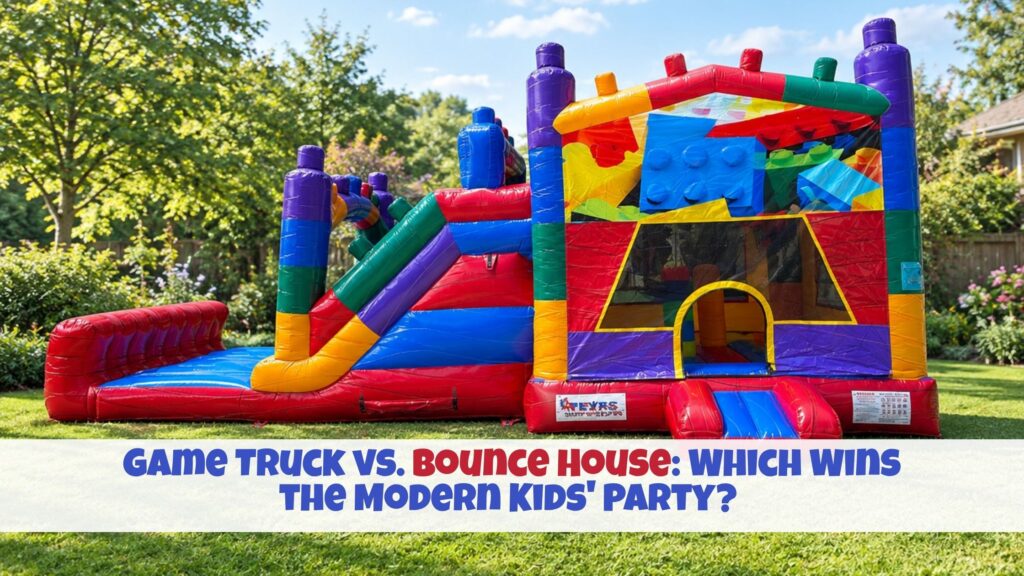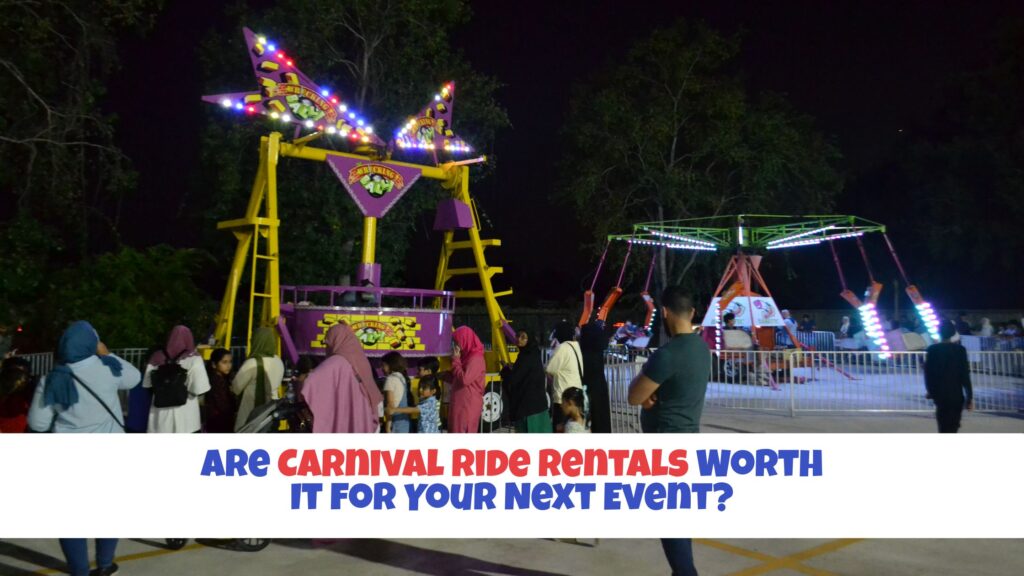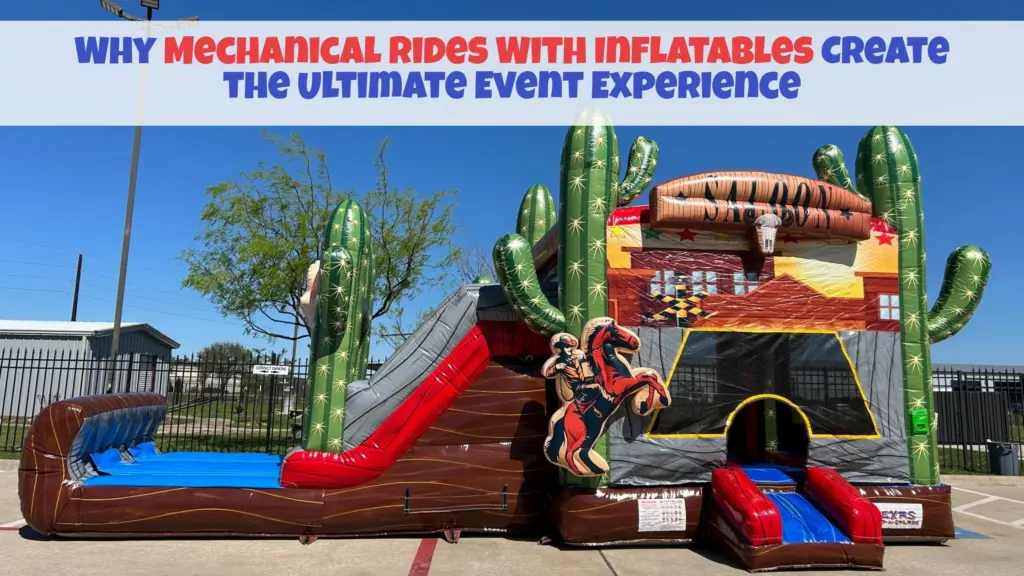
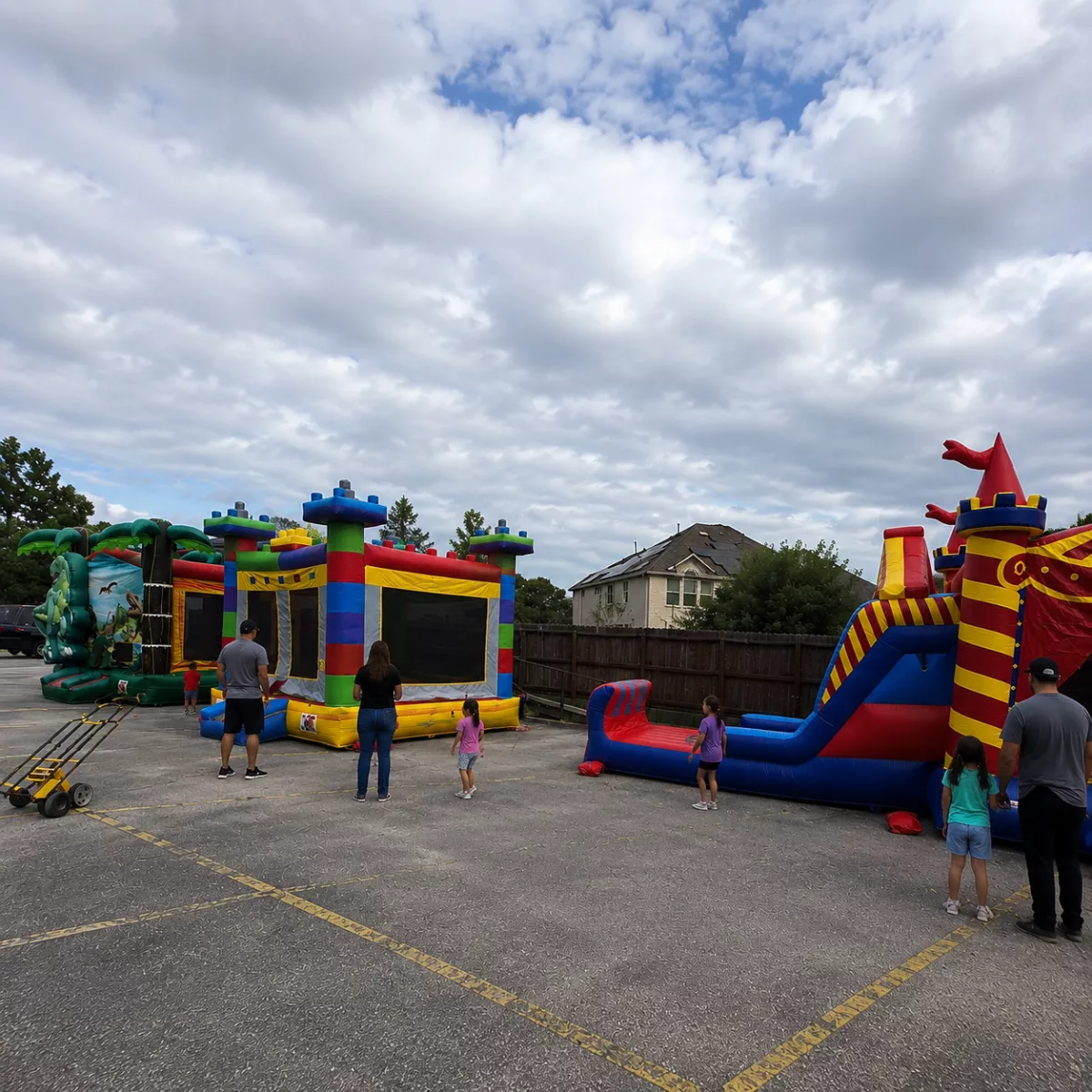

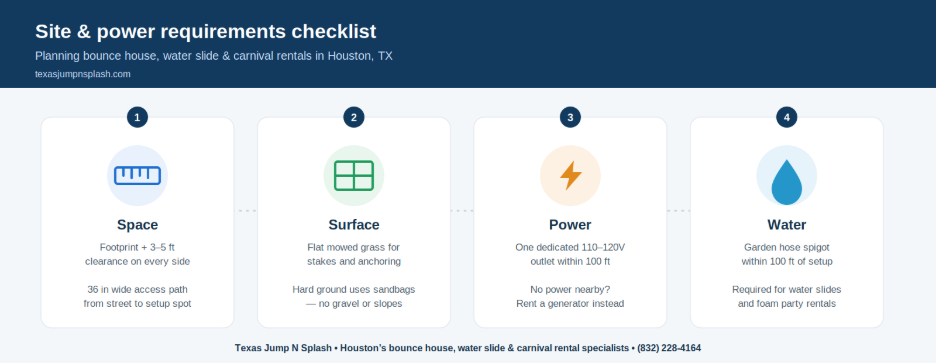
For most Houston bounce house and party rentals, you need a flat, debris-free space at least 3-5 feet larger than the unit on all sides, a clear 36-inch-wide path from the street to the setup spot, and one dedicated 110-120V outlet within 100 feet for each inflatable blower. Larger attractions like carnival rides or multi-unit setups may need a generator instead. Water slides and foam parties also need a nearby water spigot with standard garden-hose access.
That’s the short version. Here’s what it actually looks like on the day your rental shows up.
Think of this as your party rental setup guide for Houston – the site and power checks that matter most when you’re planning bounce house rentals, water slides, or larger carnival attractions for your event.
Why Site Prep Matters Before Delivery Day
Most people book a bounce house rental and don’t think about the yard again until the truck pulls up. Then the driver finds a slope, a sprinkler head, or an outlet that’s 40 feet too far away – and suddenly setup takes twice as long. Or worse, the unit can’t go where you planned at all.
A little prep work changes that. Walk your space the week before the event. Look at the ground, count your outlets, and measure the gate. Small stuff, but it’s the difference between a smooth drop-off and a scramble. Our team can also walk you through this over the phone before booking – just give us a call for a full breakdown by rental type.
Space: How Much Room Your Rental Actually Needs
Here’s the rule of thumb: take the unit’s footprint and add at least 3 feet of clearance on every side. A 15×15 bounce house needs roughly a 20×20 area once you account for stakes, blower placement, and safe entry room.
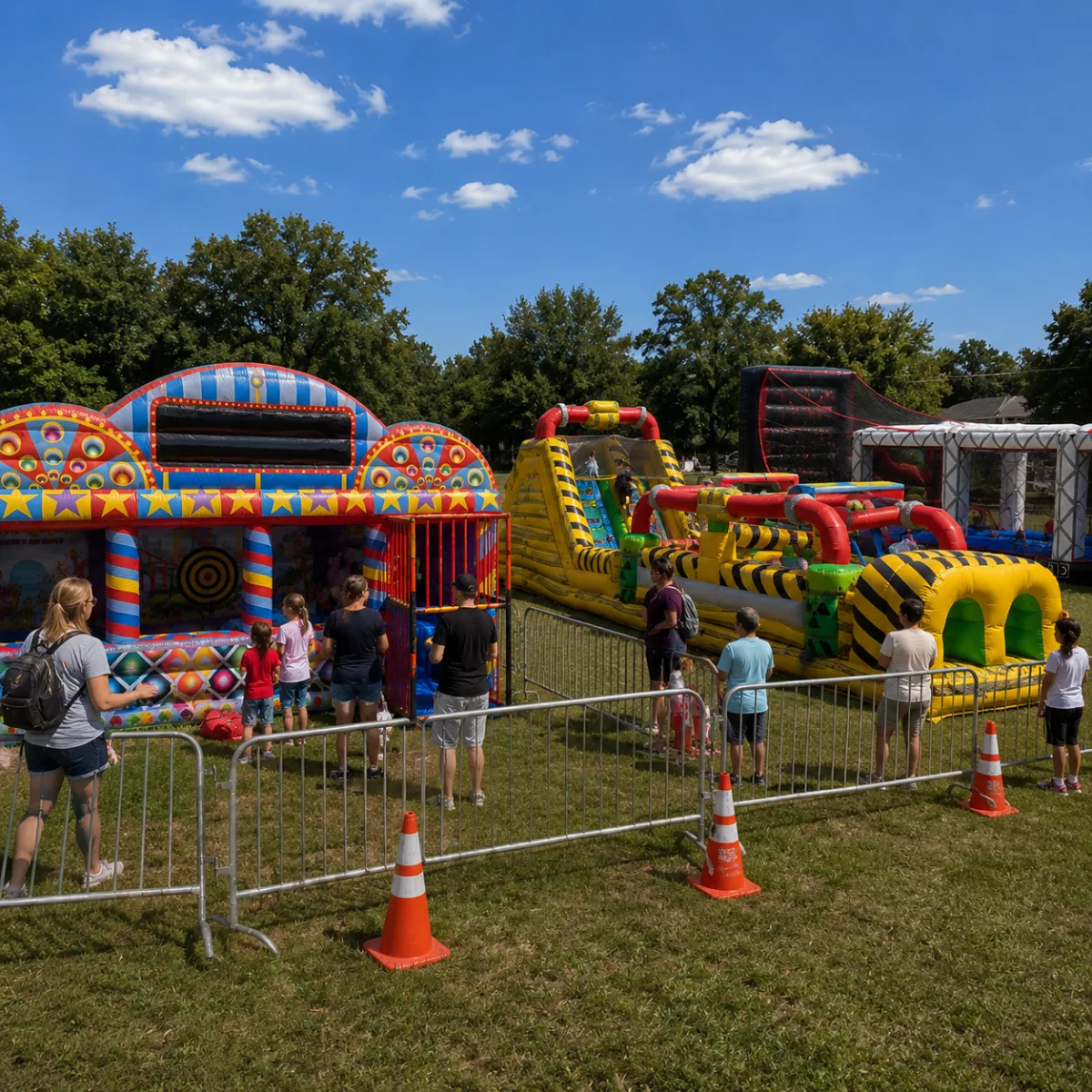
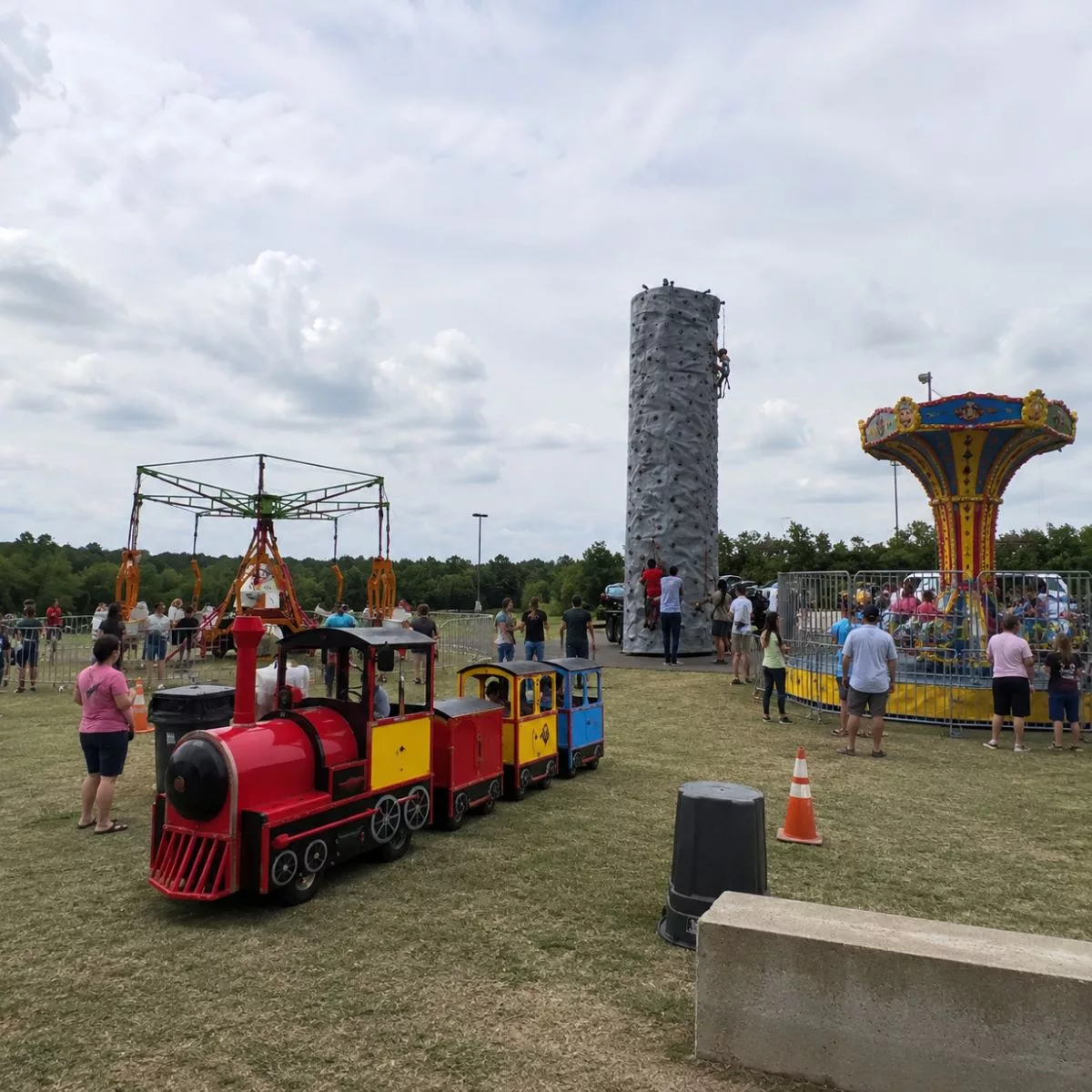
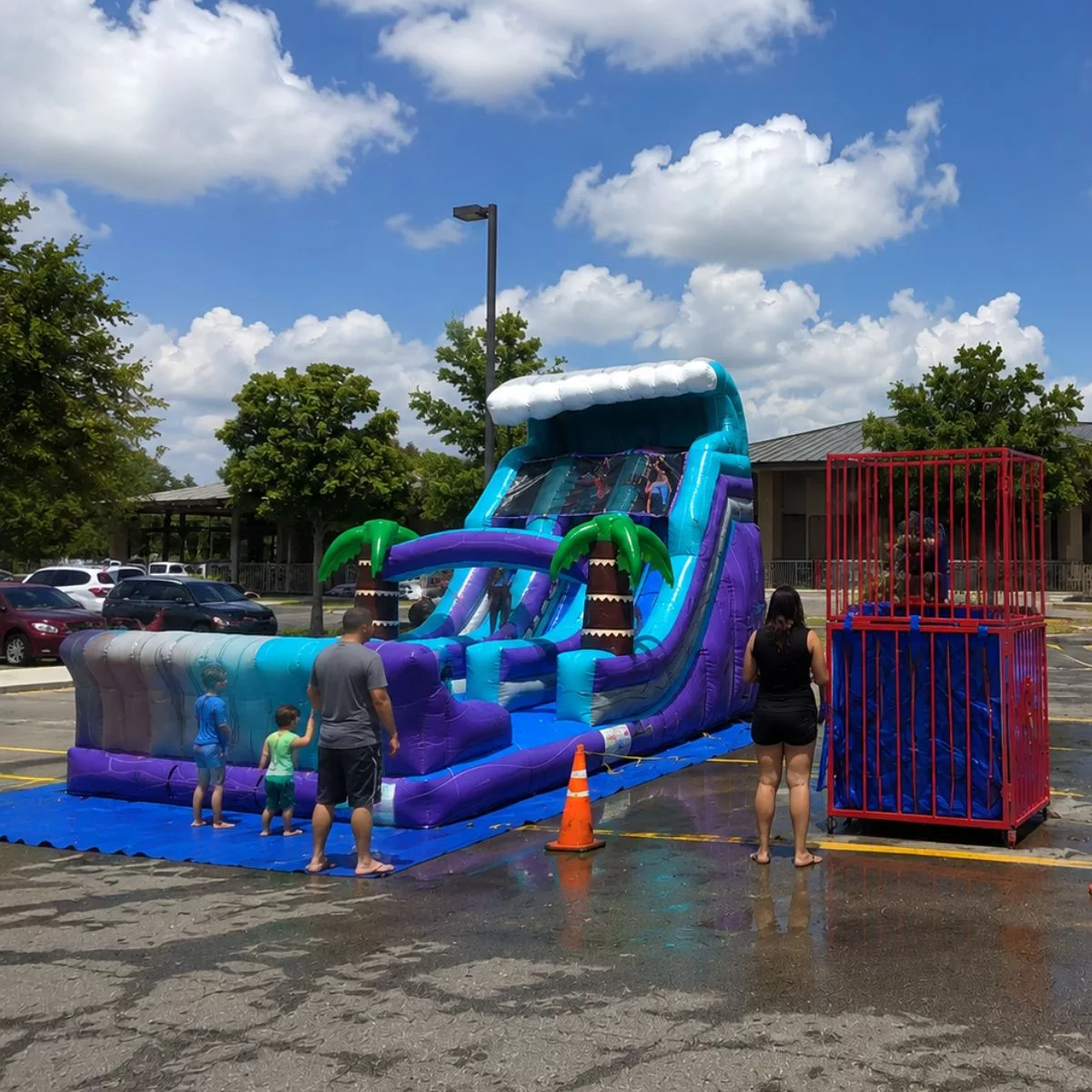
Bigger attractions need more. A water slide rental with a splash pool can run 30+ feet long. Carnival rides and mechanical attractions from our rides and games lineup often can require substantially more space than standard inflatables. For rides, obstacle courses, and other large attractions, check out the product’s listed setup dimensions before choosing your event space, plus overhead clearance for anything that spins or lifts.
Don’t forget height. Check for low tree branches, power lines, and awnings before you commit to a spot. And measure your access points – gates, side yards, driveways. If a unit can’t fit through a 36-inch gate rolled up on a hand truck, it can’t get to your backyard at all.
Not every attraction needs the same footprint, either. A 13×13 bounce house, a 30-foot water slide, and a rock climbing wall all have different clearance, access, and anchoring needs – and getting one wrong is the most common reason a delivery gets delayed. For a full breakdown by unit type, see our guide on Space, Surface & Access Requirements by Attraction.
Surface Requirements: What’s Safe to Stake or Weigh Down
Grass is the easiest surface, hands down. Stakes go straight into the ground and hold the unit secure the whole event. Flat, mowed grass with no rocks or roots underneath is ideal.
Concrete, asphalt, and other hard surfaces work too, but they change the setup. We use sandbags or water barrels instead of stakes, so plan for a slightly larger footprint to accommodate the anchor points. Gravel, mulch, and uneven or sloped ground are usually a no – they’re unsafe for anchoring and can damage the equipment. If you’re not sure your yard qualifies, send us a photo before booking. It saves everyone a headache on delivery day.
Power Requirements: Outlets, Generators, and Extension Cords
This is the part people underestimate the most. Every inflatable – bounce house, slide, obstacle course – runs on a blower that needs continuous power for the entire rental period. No power, no bounce.
Standard units need one dedicated outlet on a standard 15-amp household circuit, and it can’t be shared with anything else running that day. String lights, speakers, a neighbor’s extension cord – all of that can trip the breaker mid-party. Keep the outlet clear and remember that several outlets in the same room often sit on the same circuit, so it’s worth checking your breaker panel, not just counting plugs.
Distance matters too. Most rental companies, us included, recommend a heavy-duty, 12-gauge outdoor extension cord no longer than 50 feet – beyond that, voltage drop becomes a real issue and the blower won’t run at full strength. If your outlet is farther than that, or if you’re setting up at a park or field with no power at all, you’ll need a generator. Sizing one correctly means adding up the total wattage of everything you’re running, then padding that number by about 20% for a safety margin – two 1.5 HP blowers, for example, land around 2,030 watts, so a 3,500W+ generator is the right call. Keep the generator at least 15 feet from the inflatable and seating area, since it produces carbon monoxide, and never run one indoors or in an enclosed space. Multi-unit setups, like combining a bounce house with a carnival ride or two inflatables at once, almost always call for a generator rather than splitting outlets.
One outlet per blower is straightforward when you’re renting a single bounce house. It gets more complicated once you’re booking three or four attractions for the same event – a school carnival with a slide, an obstacle course, and a carnival ride all running at once, for example. Splitting attractions across separate circuits or sizing a generator correctly takes a bit more planning. We cover that in detail in our guide on Power & Generator Needs for Multi-Attraction Events.
Water Access for Slides and Foam Parties
Water slides and foam party rentals add one more requirement: a working garden hose connection make sure the hose can reach the setup area and that your water supply provides adequate pressure. If you’re planning multiple water attractions, additional hose connections or a Y-splitter may be needed. Standard outdoor spigot, standard hose threading – nothing exotic. If your event is at a venue without a hose bib nearby, tell us in advance. We can sometimes bring extra hose length or arrange an alternative, but it needs to be planned, not discovered on-site.
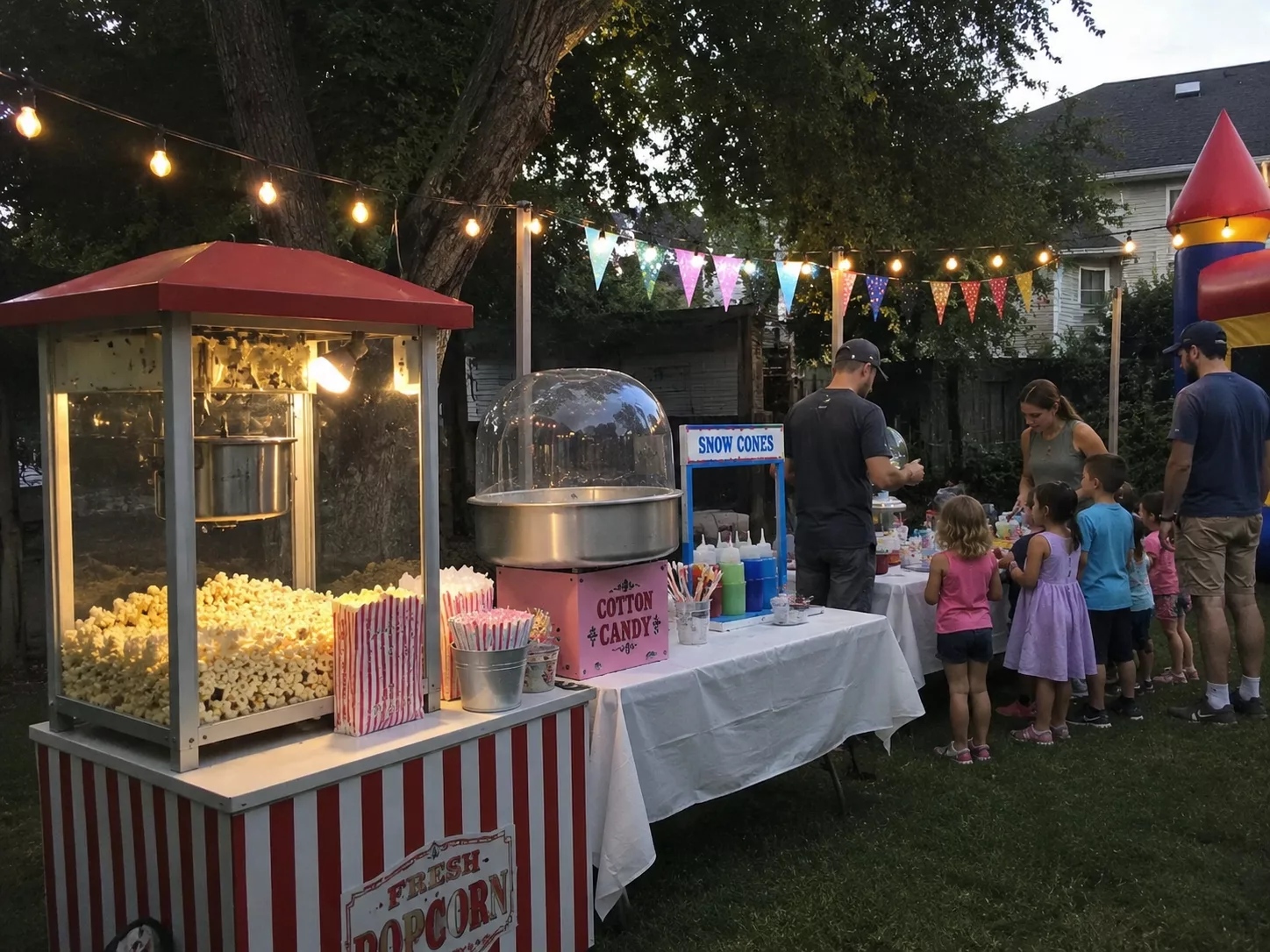
Foam parties use a decent amount of water over a two-hour session, so a spigot with consistent pressure works better than a trickle. If you’re renting more than one water attraction for the same event, plan for a Y-splitter and two hose bibs – one spigot alone usually can’t keep enough pressure for two units running at once. Same goes for dunk tanks and misting attractions from our concessions and extras category – popcorn machines and cotton candy carts need power, not water, but they should be on the same “keep this outlet free” list as your inflatables.
Houston-Specific Considerations: Heat, Weather, and HOA Rules
Houston adds a few wrinkles most cities don’t deal with. Summer heat pushes past 95°F regularly, and a dark-colored inflatable can get hot enough to matter for barefoot kids by early afternoon. Shade helps a nearby tree, a canopy tent, or scheduling the rental for morning and early evening hours.
Afternoon thunderstorms are common from spring through fall. If sustained winds reach 15–20 mph or higher, the inflatable must be deflated and shut down. Never continue using an inflatable in high winds, even when it is properly anchored, even if it’s properly staked, and any sign of lightning or thunder calls for an immediate evacuation – Rain requirements can vary by attraction. Texas Jump N Splash’s general guidance allows light rain for most inflatables, but individual rental products may have stricter weather restrictions. Always follow the weather and operating instructions listed for your specific rental. If lightning or thunder is present, immediately evacuate the inflatable and shut it down. We monitor local weather and will call ahead if conditions look unsafe. Check our rental setup guide for our full weather policy and other event-day troubleshooting.
If you’re renting in a neighborhood with an HOA – common across Katy, Cypress, Sugar Land, and Richmond – check your community rules before booking. Some HOAs restrict generator noise or require notice for large deliveries. It’s a five-minute phone call that avoids a canceled setup.
A Quick Pre-Delivery Checklist
Before your rental date, walk through this:
- Measure the space (footprint plus at least 3 feet of clearance on all sides)
- Check overhead clearance for branches, wires, and awnings
- Confirm the surface is flat grass or hard, debris-free ground
- Test the outlet you plan to use and confirm it’s on its own circuit
- Measure your gate or access path (36 inches minimum)
- Confirm hose access if you’re renting a water slide or foam party
- Check your HOA rules if generators or large trucks are involved
Keep this list handy any time you’re planning bounce house rentals, water slides, or carnival attractions it works as a general setup guide no matter the size of your event.
If any of these don’t check out, call us before your event, not the morning of. We deliver across Houston and the surrounding suburbs, and our team has seen just about every yard configuration Texas can throw at us. A five-minute call usually solves it.
Frequently Asked Questions
How much space do I need for a bounce house rental?
Take the unit’s footprint and add at least 3 feet of clearance on every side. Most standard bounce houses need a 20×20-foot area once you include room for stakes and the blower.
Do bounce house rentals need a generator?
Not always. If you have a dedicated 15-amp outlet within 50 feet of the setup spot, a standard heavy-duty extension cord works fine. You’ll need a generator, sized to the total wattage plus about 20% extra, for outdoor venues with no power, multi-unit setups, or larger carnival attractions.
What surface is safe for a bounce house rental?
Flat, mowed grass is best because it allows stakes to anchor the unit securely. Concrete and asphalt work too, using sandbags instead of stakes. Gravel, mulch, and sloped ground generally aren’t safe for setup.
How much power does a water slide rental need?
Most water slide blowers run on a standard 15-amp, 115-volt outlet, same as a bounce house. The slide also needs a garden hose connection within about 50 feet for continuous water flow – and a Y-splitter if you’re running more than one water unit at once.