Read Your Venue Before You Book a Single Attraction
Skipping this step is the most common planning mistake we see. You can’t build a good layout without knowing what you’re working with. Walk the space. Then map it. Write down:- Total square footage and its shape (long and narrow vs. wide open – these need completely different layouts)
- Where power access is (this dictates where mechanical and inflatable rides can actually go)
- Entry and exit points, and where parking feeds into the event footprint
- Any shade structures, trees, or covered areas (guests cluster here – plan around it)
- Emergency vehicle access routes, which must stay clear regardless of everything else
Put Your Biggest Rides Where Guests See Them First
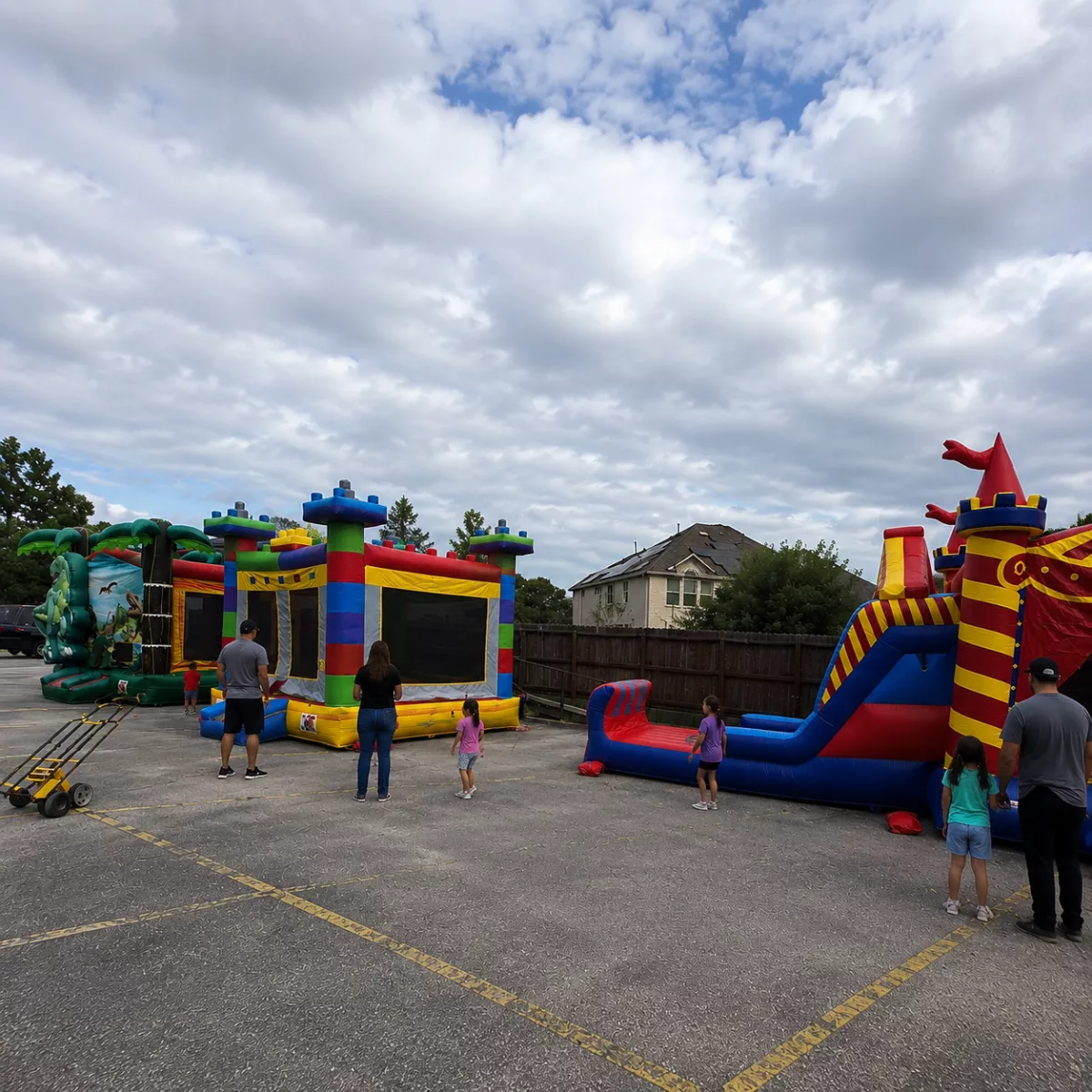
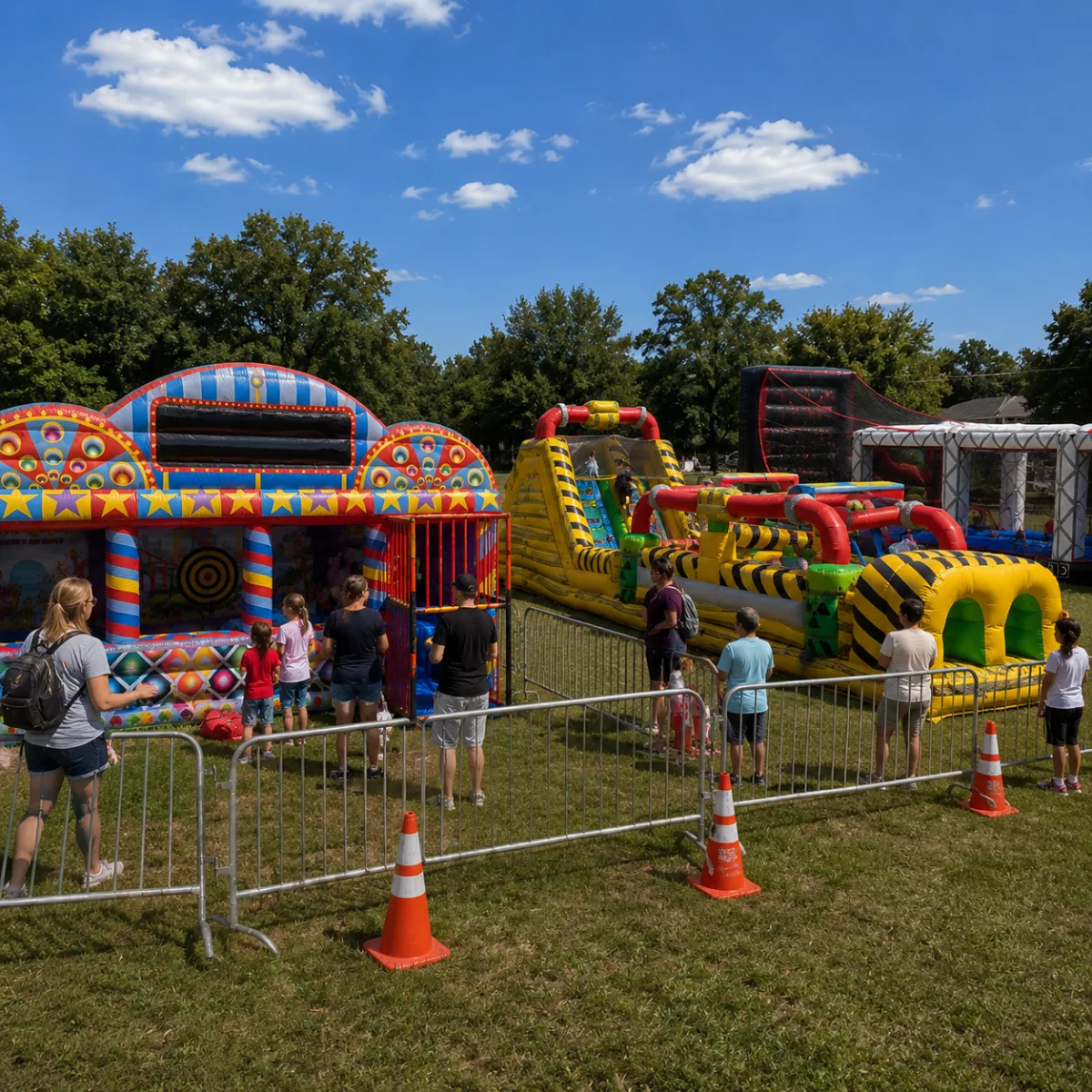
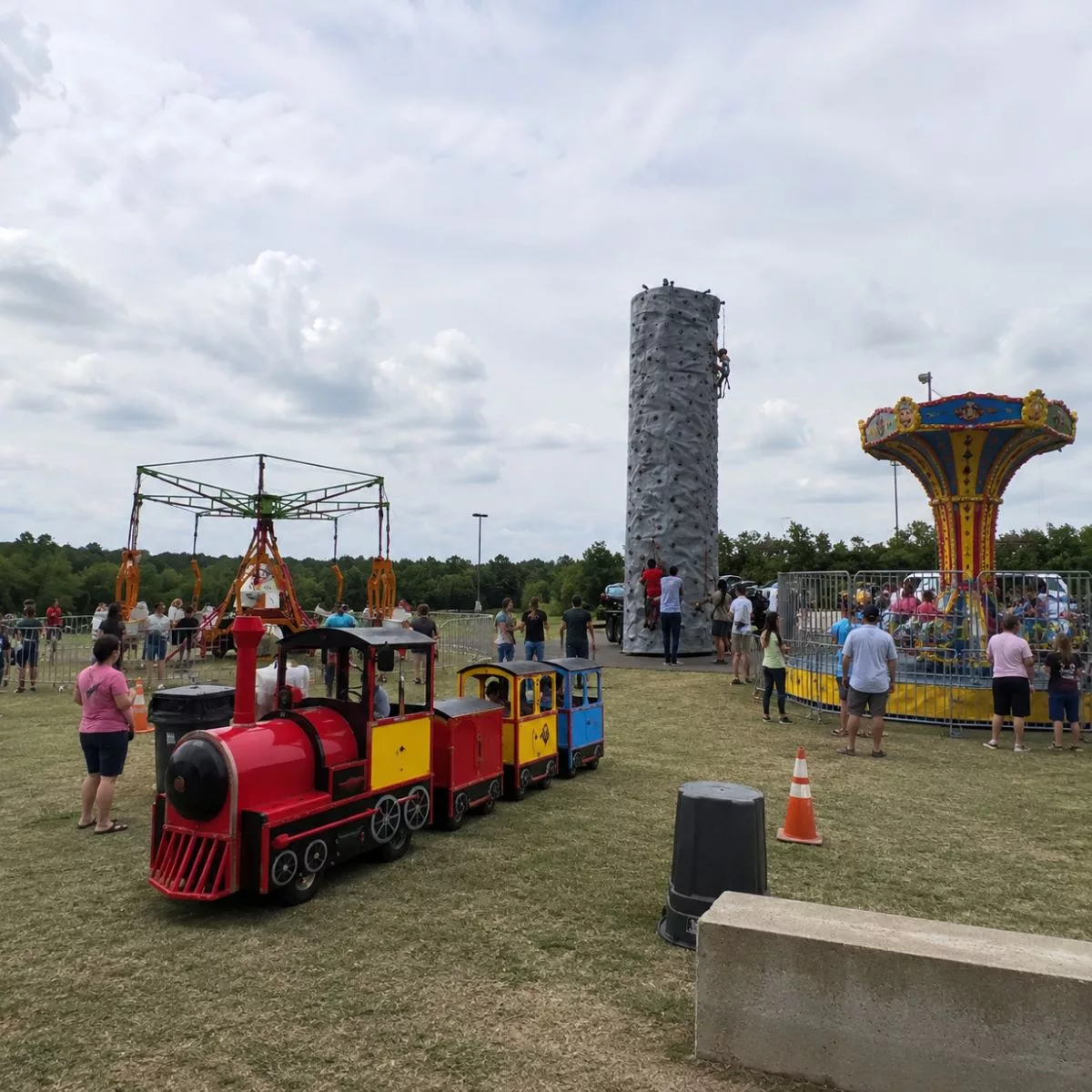
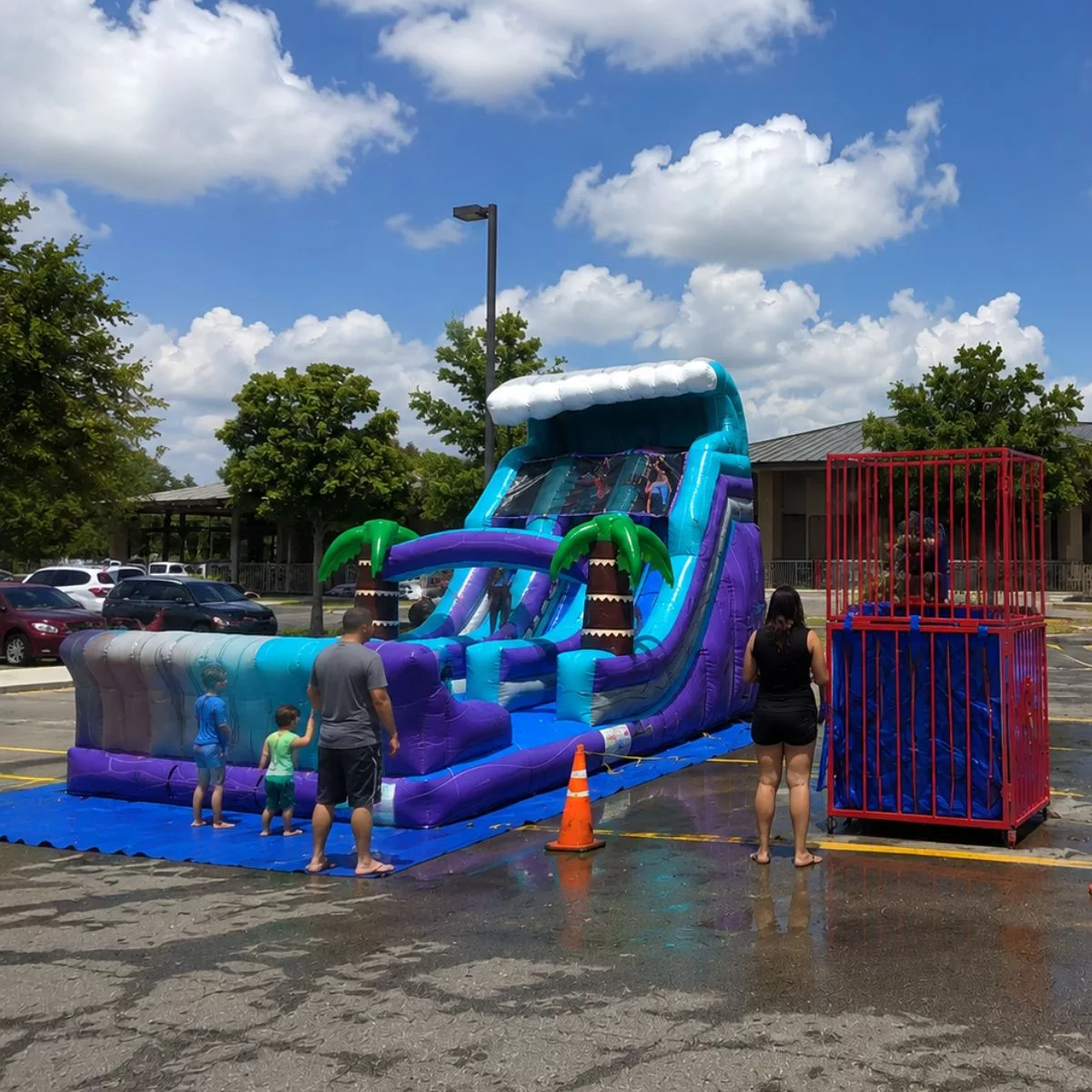
When you rent carnival rides for a school carnival, church festival, or corporate family day, the large attractions are your anchor. They set the tone. Guests walk in, see something impressive, and immediately want to be part of it. Place your headline rides – mechanical rides, large inflatables, towering water slides – toward the center of your venue, not pinned to a back corner. This does two things: it pulls guests deeper into the event space right away, and it spreads the crowd across the full footprint instead of stacking everyone near the entrance. Group rides by age and thrill level. Older kids and adults near mechanical rides and bungee attractions. Younger children on the outer edge of that zone or in a fully separate section. Mixing age groups without clear zones creates confusion – and honestly, a 6-year-old doesn’t need to be waiting in the same queue as a teenager on a ballistic ride.Design the Traffic Flow Like You’re Expecting 500 People
Even if you’re planning a birthday party for 80 guests, design your pathways like the crowd is bigger. Tight spaces compound fast when families with strollers, kids running between rides, and vendor carts all compete for the same lane. The rules that actually matter:- Keep walking paths between attractions at least 10-12 feet wide – not 6 feet
- Queue lines run parallel to pathways, never perpendicular across them
- Food stations don’t go beside ride exits (you’ll get a traffic jam every single time a ride cycle ends)
- Designate parent waiting zones near kids’ attractions so they’re not blocking active pathways
- Mark entrances and exits for each ride clearly – this alone cuts operational confusion by half
Kids Need Their Own Space – Not Just a Smaller Ride
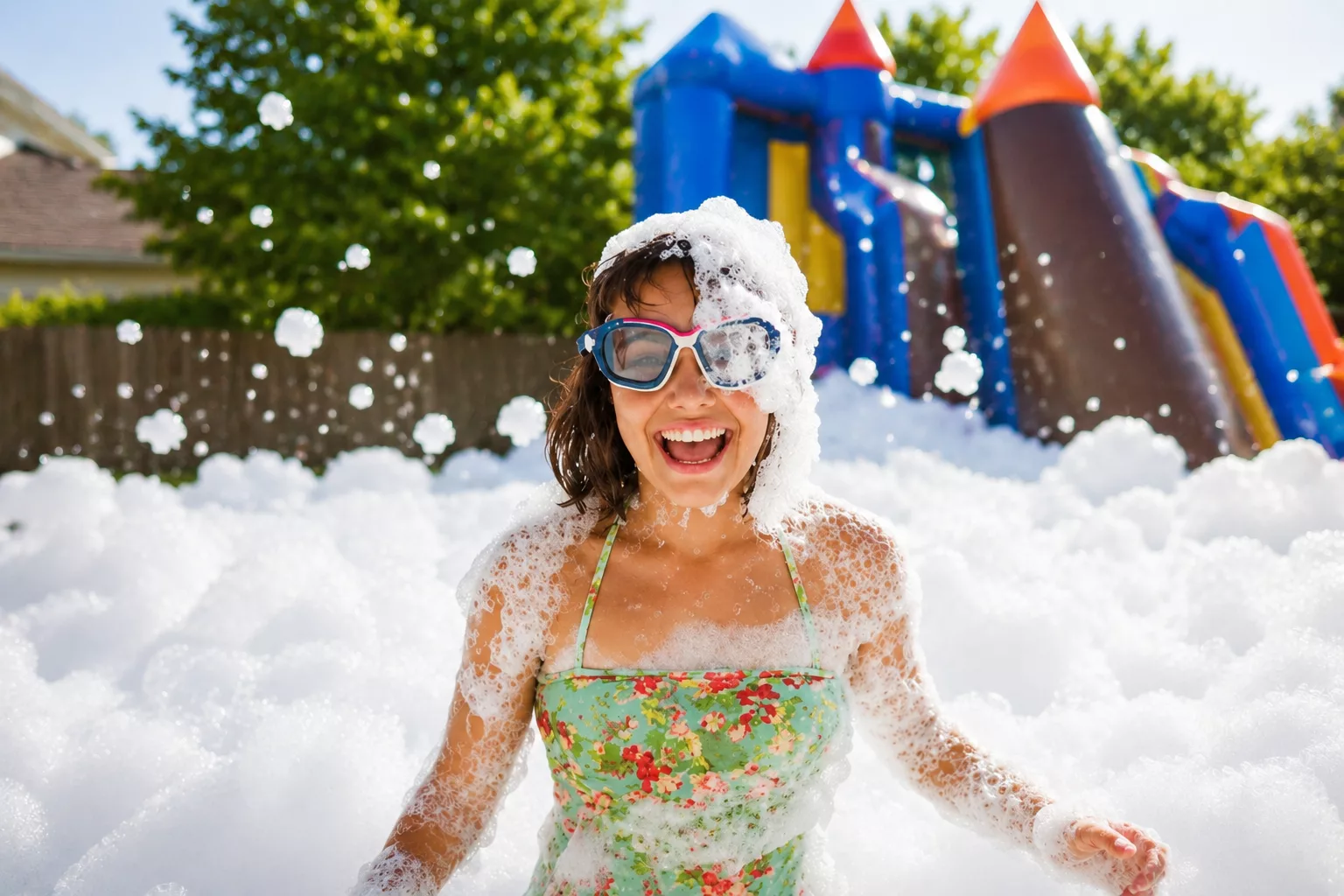
If your event has families with mixed ages, a dedicated children’s section isn’t optional. It’s the feature parents actually notice. For kids party rentals Cypress families rely on, we’ve found the most successful children’s zones include:- Bounce houses sized for toddlers and early elementary kids
- Inflatable obstacle courses with appropriate height minimums
- Carnival-style interactive games (ring toss, duck pond, ball toss) – low-stakes, high-repeat-play
- A shaded toddler play zone if the event runs more than two hours in Texas heat
- A concession station nearby so parents don’t have to drag kids across the entire venue for a snack
Where You Put Food Changes Everything
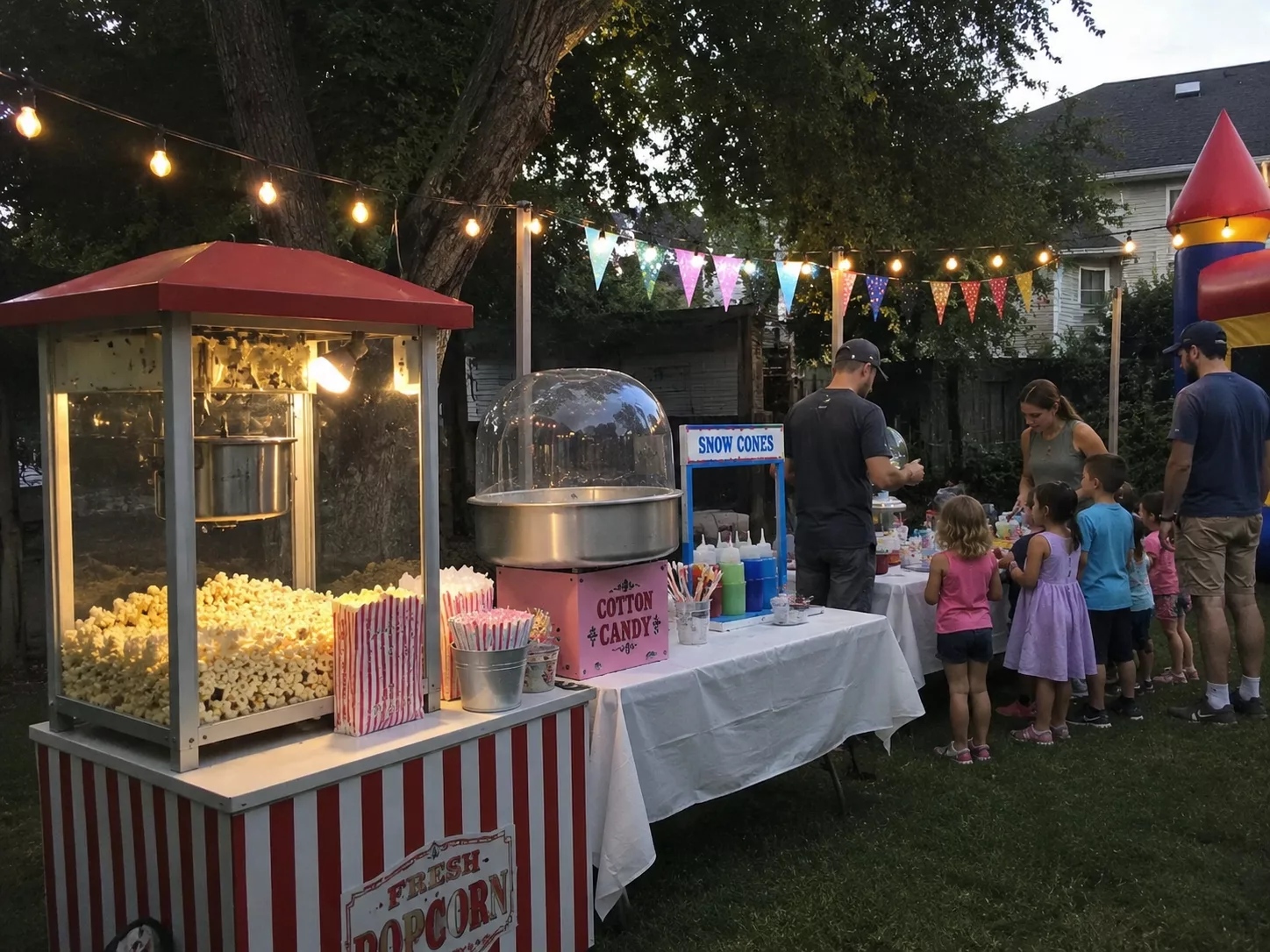
Concession areas are magnets. Guests drift toward them constantly, they linger, they sit nearby. That’s great – unless your food stations are blocking ride access or creating dead zones in the middle of your event. The layout that holds up: food vendors along the perimeter, not the center. Specifically:- Line vendors along the outer edge of the venue so foot traffic flows naturally to them without cutting through ride areas
- Add seating directly adjacent to every food station – 6 to 8 tables minimum for mid-size events
- Build shade into those dining areas where possible (tent rentals, natural shade, or market umbrellas)
- Keep a 15-foot buffer between food stations and any ride loading or exit point
Seating Isn’t Optional – It’s a Retention Tool
Families tap out when there’s nowhere to rest. It sounds obvious, but we’ve seen large events with 20 attractions and four folding chairs. Guests start leaving at the two-hour mark. Scatter rest zones throughout the space, not just at the perimeter. Place seating near:- Children’s attractions (parents need to sit while kids play – not stand)
- Food courts and concession areas
- Any entertainment stage or performance area
- Shaded spots, especially for afternoon events in the Houston area where it’s 94° in June

Signage: Nobody Reads It Until They Need It, Then They Need It Immediately
This is one of the most underbudget parts of event planning. Signs feel unnecessary until 300 guests are wandering around confused, and then you can’t fix it fast enough. Post clear directional signs for:- Carnival rides and major attractions (with arrows – not just labels)
- Restrooms (post every 50 feet if the venue is large)
- First aid station
- Ticket booth or wristband check-in
- Parking entry and exit
- Any age or height restrictions on rides – post these at the ride queue, not just at the entrance